
7 Research-Backed Exercises That Can Help Relieve Plantar Fasciitis
Few things are more frustrating than waking up in the morning and feeling a sharp pain shoot through your heel the moment your foot touches the floor. For many people living with plantar fasciitis, those first few steps of the day can feel like walking on a bed of nails.
Plantar fasciitis occurs when the plantar fascia—a thick band of tissue that runs along the bottom of the foot—becomes irritated or damaged. This tissue plays a vital role in supporting the arch and absorbing shock during movement. When it becomes strained, pain and stiffness often follow.
The encouraging news is that surgery and medication are rarely the first answer. Research consistently shows that targeted stretching and strengthening exercises can significantly reduce symptoms and improve function. By improving flexibility, building strength, and supporting proper foot mechanics, many people experience noticeable relief within just a few weeks.
If heel pain has been slowing you down, these seven simple exercises may help you get back on your feet.
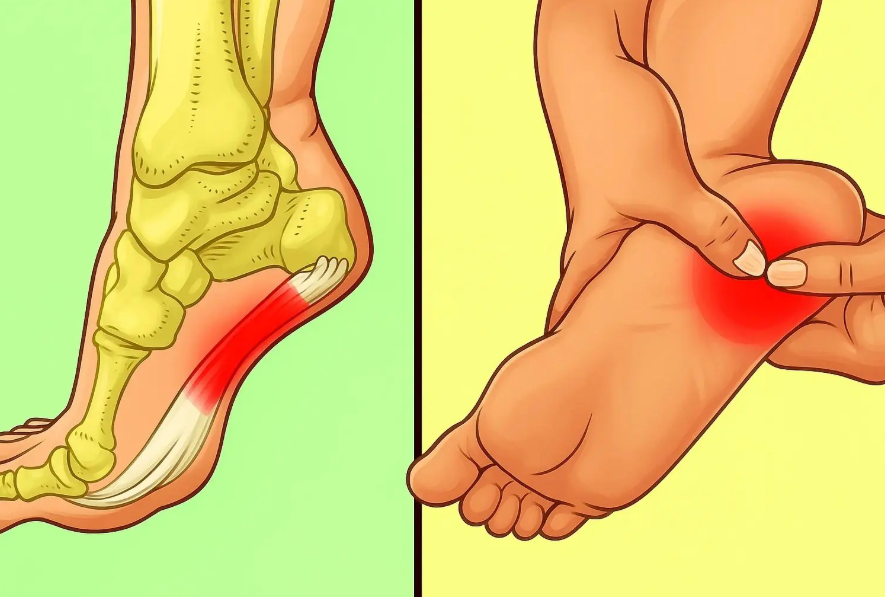
1. Seated Plantar Fascia Stretch
Often considered one of the most effective exercises for plantar fasciitis, this stretch directly targets the tissue responsible for the pain.
How to Perform It
- Sit comfortably in a chair.
- Cross the affected foot over your opposite knee.
- Hold your toes and gently pull them back toward your shin.
- You should feel a stretch along the arch of your foot.
Recommended Duration
Hold for 20 to 30 seconds and repeat several times.
Why It Helps
This stretch specifically targets the plantar fascia and can reduce the stiffness that commonly causes morning heel pain.
Helpful Tip: Perform this stretch before getting out of bed to prepare the tissue for weight-bearing activities.
2. Wall Calf Stretch
Tight calf muscles can increase stress throughout the lower leg and foot, contributing to plantar fascia strain.
How to Perform It
- Stand facing a wall.
- Place both hands against the wall at shoulder height.
- Step one foot backward, keeping the knee straight and heel flat.
- Lean forward until you feel a stretch in the calf of the back leg.
Recommended Duration
Hold for 30 seconds, then switch sides.
Why It Helps
Improving calf flexibility reduces tension on the Achilles tendon and heel, helping decrease stress on the plantar fascia.

3. Towel Curls
The small muscles inside the foot play a major role in supporting the arch. Towel curls help strengthen these often-overlooked muscles.
How to Perform It
- Sit in a chair with a small towel placed flat on the floor.
- Using only your toes, pull the towel toward you.
- Straighten the towel and repeat.
Why It Helps
Strengthening the intrinsic foot muscles improves arch support and reduces strain placed on the plantar fascia during daily activities.
Helpful Tip: Add a small weight to the far end of the towel once the exercise becomes easier.
4. Heel Raises
Strong calf muscles and foot stabilizers help distribute body weight more efficiently during walking and standing.
How to Perform It
- Stand with your feet shoulder-width apart.
- Slowly rise onto your toes.
- Hold the top position for two seconds.
- Lower your heels back to the floor with control.
Recommended Repetitions
Perform 2 to 3 sets of 10 to 15 repetitions.
Why It Helps
Heel raises strengthen the muscles that support the ankle, arch, and lower leg, reducing excessive strain on the plantar fascia.

5. Marble Pickups
This simple exercise improves foot strength, coordination, and control.
How to Perform It
- Scatter several marbles or small objects on the floor.
- Pick them up one at a time using your toes.
- Place each item into a bowl or container.
Why It Helps
The exercise activates important stabilizing muscles throughout the foot and encourages healthy movement patterns.
Helpful Tip: If marbles aren’t available, small household items such as pens, bottle caps, or coins can work just as well.
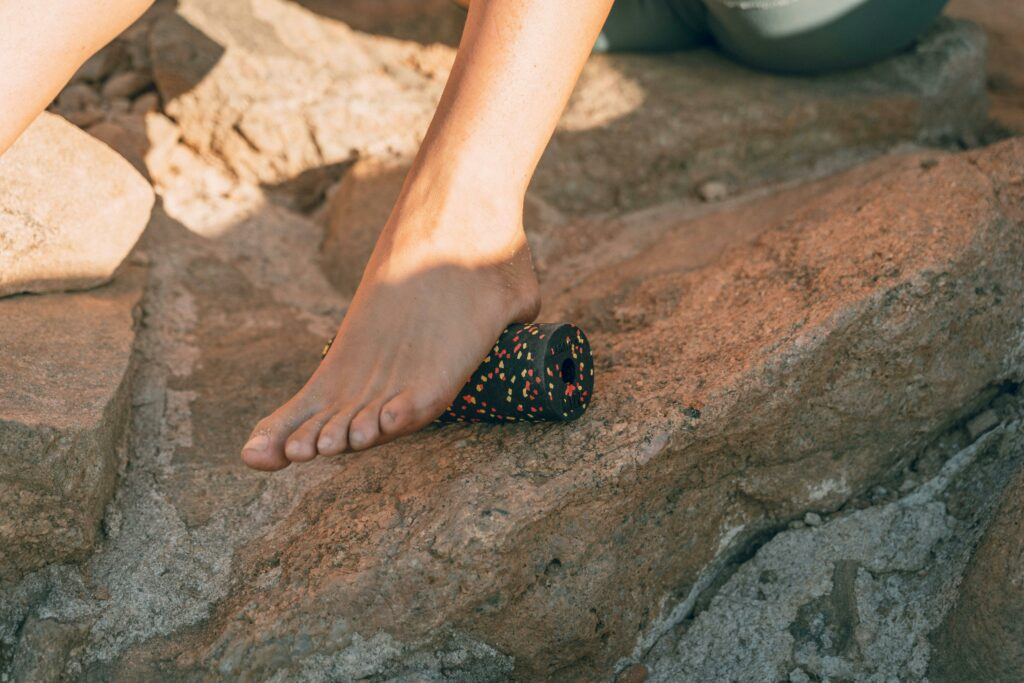
6. Rolling Foot Massage
While technically not an exercise, this self-massage technique can provide valuable pain relief and improve tissue mobility.
How to Perform It
- Sit comfortably in a chair.
- Place a tennis ball, massage ball, or frozen water bottle beneath your foot.
- Slowly roll it from your heel to the ball of your foot.
Recommended Duration
Continue for 1 to 2 minutes.
Why It Helps
Rolling helps loosen tight tissue, stimulate circulation, and temporarily reduce discomfort, making stretching exercises more effective.
Helpful Tip: A frozen water bottle can provide the added benefit of cooling irritated tissue.
7. The Short Foot Exercise
This exercise targets the muscles responsible for maintaining the foot’s natural arch.
How to Perform It
- Stand or sit with your foot flat on the floor.
- Without curling your toes, gently pull the ball of your foot toward your heel.
- Your arch should lift slightly as your foot shortens.
Recommended Duration
Hold for five seconds, then relax.
Why It Helps
The exercise strengthens the muscles that support the arch, helping improve foot stability and reduce excessive strain during movement.
Why Stretching and Strengthening Matter
For years, plantar fasciitis was viewed primarily as an inflammatory condition. However, more recent research suggests that long-term heel pain often involves tissue degeneration and mechanical overload rather than inflammation alone.
Think of your foot as a carefully designed structure. The plantar fascia acts like a support cable, helping maintain the arch and absorb force during walking. When surrounding muscles are weak or tight, that support cable experiences greater strain.
This is why successful recovery usually requires two key components:
Stretching: Reducing Tension
Tight muscles in the calves and feet increase stress on the plantar fascia. Stretching helps restore flexibility, improve mobility, and reduce tension throughout the lower leg.
Strengthening: Improving Support
Strength exercises train the muscles of the feet, calves, and ankles to handle greater loads. Over time, these tissues become more resilient and better equipped to support daily activities.
Together, stretching and strengthening address the underlying causes of plantar fasciitis rather than simply masking symptoms.

What to Expect During Recovery
Recovering from plantar fasciitis requires patience and consistency.
Most evidence-based treatment programs suggest that meaningful improvement typically occurs within four to eight weeks of regular exercise. Some people notice relief sooner, while others may require additional time depending on the severity of their symptoms.
General Guidelines
Stretching
- Perform stretches 2 to 3 times daily.
- Focus especially on the morning before your first steps.
Strength Training
- Complete strengthening exercises 1 to 2 times daily.
- Start slowly and increase intensity gradually.
The goal is to challenge the tissues without creating excessive pain or irritation the following day.
Final Thoughts
Living with plantar fasciitis can be physically uncomfortable and emotionally frustrating. Simple activities like walking, exercising, or even standing for extended periods can become challenging when every step hurts.
While quick fixes may offer temporary relief, long-term improvement usually comes from addressing the root cause of the problem. Consistent stretching and strengthening can help restore healthy foot mechanics, reduce pain, and prevent future flare-ups.
Remember that healing takes time. Stay consistent, listen to your body, and focus on gradual progress rather than overnight results. With patience and the right approach, many people can significantly reduce their symptoms and return to the activities they enjoy.
Medical Disclaimer: This article is intended for informational and educational purposes only and should not be considered medical advice. Always consult a qualified healthcare professional before beginning any new exercise or treatment program, especially if you have ongoing pain, injuries, or medical conditions.


